Metro
Fuel Subsidy Clash: Atiku Slams Tinubu Over Copying Petrol Production Policy

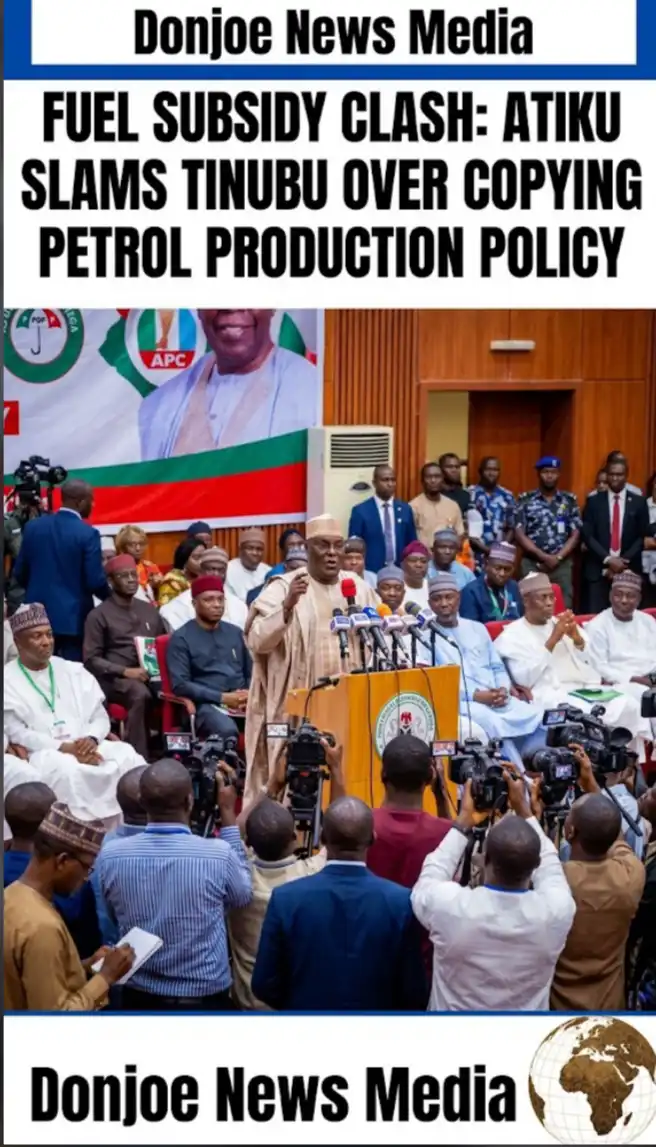
The bitter political battle over Nigeria’s economic survival has just exploded into a fierce war of words between the nation’s biggest political titans. This detailed report explores the intense fuel subsidy clash where former Vice President Atiku Abubakar accused President Bola Tinubu of improperly copying his petrol production subsidy model while heavily criticizing the administration’s newly announced 30-day fuel discount initiative. Consequently, this explosive development has triggered massive debates across every single state today. Therefore, citizens are actively demanding real solutions to the crushing cost of living. Indeed, the ongoing political rivalry heavily shapes the future of national economic policy.
Initially, the dramatic confrontation began following a highly controversial policy announcement from the presidency in Abuja. Specifically, the federal government officially introduced a temporary 30-day discount on petrol to ease public anger. However, Atiku Abubakar quickly released a scathing public statement from his official residence on Saturday. Consequently, the opposition leader flatly rejected the temporary discount, calling it a cheap and highly deceptive political gimmick. Furthermore, he strongly argued that the current administration merely scrambles to cover up its massive economic failures. Thus, the subsidy debate has rapidly escalated into a full-blown national crisis.
Essentially, Atiku believes that President Tinubu continues to aggressively steal his original governance ideas without proper understanding. Specifically, the former Vice President heavily promoted a comprehensive petrol production subsidy model during his 2023 presidential campaign. Consequently, he envisioned a highly structured system that would directly empower local refineries to drastically lower domestic fuel prices. On the contrary, Atiku claims that Tinubu simply implements chaotic, short-term palliative measures that yield zero lasting benefits. Therefore, he fiercely accuses the ruling party of intellectual theft and absolute policy incompetence. Indeed, the political opposition is determined to completely expose these executive shortcomings.
Furthermore, Atiku highlighted the severe economic hardship currently devastating millions of hardworking Nigerian families today. Specifically, the sudden removal of the fuel subsidy has aggressively pushed commodity prices to completely unprecedented levels. Consequently, transport fares have doubled, and small businesses are actively shutting down nationwide due to high operating costs. Nevertheless, the presidency consistently urges citizens to remain patient, promising that the pain is only temporary. Yet, Atiku insists that the administration’s 30-day discount is merely a tiny drop in a massive ocean of inflation. Thus, the public remains heavily skeptical of these brief government interventions.
Moreover, the opposition leader heavily criticized the actual implementation of the newly announced 30-day fuel discount. Specifically, he questioned how the government intends to distribute the subsidized fuel fairly across all thirty-six states. Consequently, Atiku strongly suspects that corrupt middlemen will easily divert the cheap petrol to the black market. Furthermore, similar palliative programs in the past have frequently suffered from massive corruption and absolute lack of transparency. Therefore, he boldly predicts that the discount will only enrich a few politically connected individuals. Indeed, many independent economic analysts openly share these identical concerns.
Interestingly, the bitter clash heavily centers on the best long-term strategy for Nigeria’s highly troubled oil sector. Specifically, Atiku continues to passionately advocate for the total privatization of all state-owned refineries. Consequently, he strongly believes that private investors can manage these massive assets much more efficiently than the government. Furthermore, boosting local refining capacity would completely eliminate the extremely expensive need for fuel imports. On the other hand, the Tinubu administration heavily relies on importing petroleum products while trying to revive the local refineries. Therefore, this fundamental disagreement continues to trigger intense policy clashes among top elites.
Meanwhile, the presidency has quickly fired back at Atiku, vigorously defending its economic reform agenda. Specifically, government spokespersons in Abuja accused the former Vice President of being bitterly jealous of Tinubu’s bold decision-making. Consequently, they firmly maintain that the 30-day fuel discount is a genuine, highly compassionate effort to help the poor. Furthermore, the administration aggressively argues that Atiku’s proposed models are completely unrealistic and lack practical implementation pathways. Therefore, the ruling party strongly urges the opposition to stop politicizing critical national security and economic matters. Thus, the war of words continues to dominate national headlines.
Historically, the fuel subsidy has always been a highly sensitive and volatile issue within Nigerian politics. Specifically, past administrations have repeatedly tried and failed to completely remove the expensive financial burden. Consequently, anytime the government attempts to adjust fuel prices, massive civil unrest and nationwide strikes instantly follow. Furthermore, the Nigerian National Petroleum Company Limited consistently struggles to meet the massive domestic demand. Therefore, resolving this systemic crisis requires incredible political courage and highly meticulous planning. Indeed, finding a lasting solution remains the ultimate test for any sitting president.
Undoubtedly, this high-level political clash directly affects the daily lives of ordinary citizens across the country. Specifically, commuters in major cities like Lagos, Kaduna, and Port Harcourt continue to face long queues at filling stations. Consequently, the constant uncertainty surrounding fuel prices actively paralyzes local businesses and everyday transportation. Furthermore, the public feels increasingly caught in the middle of this relentless elite power struggle. Therefore, most Nigerians are far more interested in affordable fuel than political arguments between rival parties. Indeed, the demand for immediate, tangible relief remains completely universal.
Currently, the federal government is under intense pressure to demonstrate the practical success of its reforms. Specifically, the administration must quickly show that the painful subsidy removal will eventually lead to massive national development. Consequently, officials are aggressively highlighting various ongoing infrastructural projects funded by the subsidy savings. Furthermore, they continuously promise that the savings will soon improve public healthcare and education. Yet, the opposition relentlessly argues that these promises are merely illusions designed to placate the masses. Thus, the struggle for the public narrative remains incredibly fierce.
Additionally, independent economic experts are actively analyzing both Atiku’s and Tinubu’s proposed economic models. Specifically, many analysts agree that a transition to local production is absolutely the only sustainable path forward. Consequently, the successful operations of private refineries, such as the Dangote Refinery, are heavily viewed as a major game-changer. Furthermore, the government must proactively support these local producers to reduce the heavy reliance on foreign exchange. Therefore, policy consistency and absolute transparency are entirely vital to attracting the necessary investments. Indeed, the nation simply cannot afford any more policy trial and error.
Moreover, the political implications of this subsidy clash will likely reverberate into the 2027 general elections. Specifically, both Atiku and Tinubu are already actively positioning themselves and their parties for the upcoming contest. Consequently, every single economic policy is being heavily scrutinized and utilized as political ammunition by both sides. Furthermore, the opposition will continuously blame the ruling party for the high cost of living to win over voters. Therefore, the economic debate will heavily dominate the political landscape for the foreseeable future. Thus, the fight for the presidency has already began in earnest on the economic front.
In addition, the labor unions are also closely monitoring the unfolding situation with extreme caution. Specifically, the Nigeria Labour Congress has previously threatened massive industrial action over rising living costs. Consequently, the government must tread very carefully to avoid completely shuting down the national economy. Furthermore, the 30-day fuel discount is widely seen as an attempt to pacify these powerful labor groups. Therefore, the administration must ensure that its palliative measures are actually effective and reach the target audience. Indeed, maintaining industrial peace is absolutely critical for national stability.
Specifically, our dedicated readers can stay closely connected to these crucial economic and political developments. You can consistently visit www.donjoemedia.com for continuous, highly factual analysis of the subsidy crisis. Furthermore, our seasoned journalists actively track the ongoing debates to quickly provide verified news updates daily. Therefore, staying informed through reliable platforms actively helps you navigate the complex national landscape. Indeed, trusting independent, fact-checked media is absolutely essential during times of national uncertainty.
Similarly, the federal lawmakers are also heavily involved in the ongoing debate over the subsidy removal. Specifically, the National Assembly is constantly reviewing various legislative frameworks to support the economy. Consequently, they are actively pushing for increased oversight on the utilization of the saved subsidy funds. Furthermore, parliamentarians want to ensure that every single naira saved is transparently spent on public welfare. Therefore, the legislature must maintain a highly rigorous checks and balances system on the executive arm. Thus, the push for absolute accountability remains a collaborative national effort.
Interestingly, the public reaction to Atiku’s accusations has been highly mixed across different regions. Specifically, some citizens strongly agree with his critique, viewing the government’s policies as highly ineffective. Consequently, they are actively calling for a complete reversal of the subsidy removal to ease their current pain. On the contrary, other Nigerians firmly support the president, arguing that the tough reforms are necessary for future growth. Furthermore, they believe that Atiku is simply trying to exploit the situation for his own political gain. Therefore, the subsidy issue remains a deeply polarizing topic nationwide.
Consequently, the federal government must rapidly communicate its long-term vision more effectively to the public. Specifically, the presidency needs to provide highly detailed, transparent reports on the exact impact of its policies. Furthermore, citizens deserve to know precisely how the subsidy savings are being utilized to improve their communities. Consequently, hiding crucial data or using vague promises only serves to fuel public anger and skepticism. Therefore, absolute openness is the only way the administration can hope to win back public trust. Indeed, the fight against economic misinformation is just as critical as the reforms themselves.
Moreover, the international community is also closely watching Nigeria’s difficult transition away from the subsidy. Specifically, global financial institutions like the World Bank and IMF have long advocated for the policy’s removal. Consequently, they heavily praise the president’s courage while urging the government to provide robust social safety nets. Furthermore, the successful stabilization of Nigeria’s economy is highly critical for the entire West African sub-region. Therefore, the federal government must ensure its reforms do not trigger a massive humanitarian crisis. Thus, the stakes of this economic transition are incredibly high on both the national and global stages.
To illustrate the gravity of the situation, the high cost of fuel is directly impacting the agricultural sector. Specifically, farmers are facing immense challenges transporting their produce from rural areas to urban markets. Consequently, food prices are rising rapidly, exacerbating the already severe cost of living crisis. Furthermore, the government must proactively intervene to support these farmers and secure the national food supply. Therefore, integrating fuel subsidies or discounts directly into the agricultural supply chain is highly critical. Indeed, protecting the food security of the nation must always remain a top priority.
Conversely, the opposition continues to paint a highly grim picture of the country’s economic future under the current administration. Specifically, they aggressively argue that the government’s policies are actively driving the nation into a deep recession. Consequently, Atiku and his allies are busy presenting their alternative economic blueprints to the public. Furthermore, they are promising a swift return to economic prosperity if given the mandate to lead in the future. Therefore, the electorate faces a highly critical choice between two entirely different visions for the country. Indeed, the outcome of this debate will shape Nigeria’s path for decades to come.
Read also Relief Material Diversion Arrests: DSS Nabs Four Over Stolen Saudi Donations in Taraba
Ultimately, the fuel subsidy clash is far more than just a political debate; it is a battle for the soul of Nigeria’s economy. Specifically, the decisions made by the government today will directly determine the quality of life for millions of citizens tomorrow. Consequently, the administration must prioritize the needs of the people over political expediency or short-term gains. Furthermore, they must listen to constructive criticism and be willing to adjust their policies where necessary. Therefore, finding a sustainable, inclusive path forward is the only way to ensure lasting national prosperity. As the drama continues to unfold, the Nigerian people will ultimately decide who possesses the best vision for their future.
Written by Jonadab Oluikpe | Published by Donjoe News Media
We provide authoritative, fact-checked reporting on national security, policy developments, and socio-economic trends shaping the nation’s future.

Pingback: Rivers 2027: Is Kingsley Chinda's APC Governorship Candidacy Beyond Legal Challenge? - Donjoe Media